Olaplex is an incredibly hyped product in the hairdressing world right now, it repairs the sulfur bonds in the hair and makes you e.g. can bleach brown hair completely blonde without getting damaged. But is Olaplex good or bad for your hair?
I have tested it on my hair and got a super soft and wonderful result! My hairdresser Monica Werner always use it when she bleaches hair and bleached a customer for several hours (6 I think it was) and the hair quality felt even better after bleaching, crazy!
But I have also talked to hairdressers who think that hair becomes hard and strive for olaplex, and I read in the comments on Elin Johansson's hairdressing blog that a person had his hair destroyed by it, to which Elin replied that she had heard it from more hairdressers and would have a meeting with Olaplex about this, and that she had actually stopped using the product for the time being for that reason.
After my hairology education, I have thought a lot about this, and have talked to one of Sweden's Olaplex technicians regarding what this may be due to.

What are sulfur bonds and how can they be repaired?
The sulfur bonds are in the second layer of the hair, ie inside the hair and it is there that you do chemical treatments such as color and permanent. These sulfur bonds consist of amino acids, and you can repair damaged sulfur bonds by adding just pure amino acids for a building effect.
Amino acids are protein and make hair strong and durable.
Does Olaplex work?
Olaplex also repairs these sulfur bonds, but not with amino acids, but it works! On the one hand, Olaplex links damaged bonds together, while at the same time preventing the proteins in the hair from being "eaten up" during treatments.
Why does Olaplex not work as well on certain hairs?
There are two types of hair, hydrophilic and hydrophobic. This is what hairology is all about. Hydrophilic hair contains a lot of moisture, but is more elastic than strong and therefore becomes quite weak. It needs more strength, and where do you get strength for your hair? Protein! Bleached hair is often hydrophilic, and needs much more strength, then Olaplex is a good idea.
Hydrophobic hair, on the other hand, has more strength than elasticity (ie more protein than moisture) and needs moisture and not protein. So, if you have many and strong sulfur bonds, the hair can feel stiff and tight. There does not have to be anything wrong with that.
If you then do an Olaplex treatment on a phobic hair, what happens then? Well, it may be that the hair gets even more sulfur bonds and strength and can therefore feel hard afterwards.
Do you follow? If you have hair that has a little protein (strength), olaplex works well. But if you already have protein-rich hair that is already strong, then can it feels hard after olaplex.
How to know if you have hydrophilic or hydrophobic hair?
It is not possible to see / feel the hair to determine this, because it is inside the hair. Without having to do a hair test with a device that you can do in salons that work with Hairology.

Hairology Intensive Cure is a hair wrap that builds up chemically treated and damaged hair using silk amino acids, RNA and vitamin complexes. And with this you repair the sulfur bonds in the hair, it is super good!
Have you tested Olaplex, and how did you experience it? As I said, it worked really well for me, and I have hydrophilic hair.
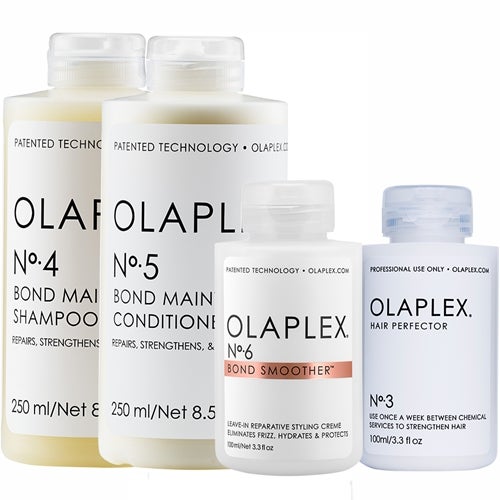
Olaplex is available for purchase at e.g. Eleven.se (adlink)
Shout out if you have any questions! ♥
Also read: Permanent hair before and after



 English
  Swedish
  Spanish